This is comments to a blog about A.A. started by a "PhD" named M. D. who asks, "Is A.A. a cult" and I must admit, it brings out some interesting discussion:
"The author is trying real hard to rationalize AA. Being accessible and free means nothing...so are alcohol and drugs and Christ, etc., etc. The "peer support" is not support...it is peer indoctrination. I tried AA for 14 years...I believed it, I "worked it", and it almost killed me.
I believe thatn any professional that reccomends AA or any twelve-step treatment should have their license revoked. It is no different than recommending Scientology to someone with a broken arm, or Islam to someone with cancer, or Catholocism to someone with herpes.
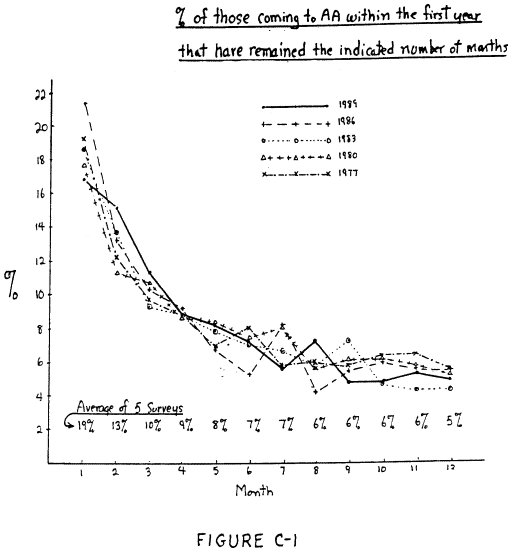
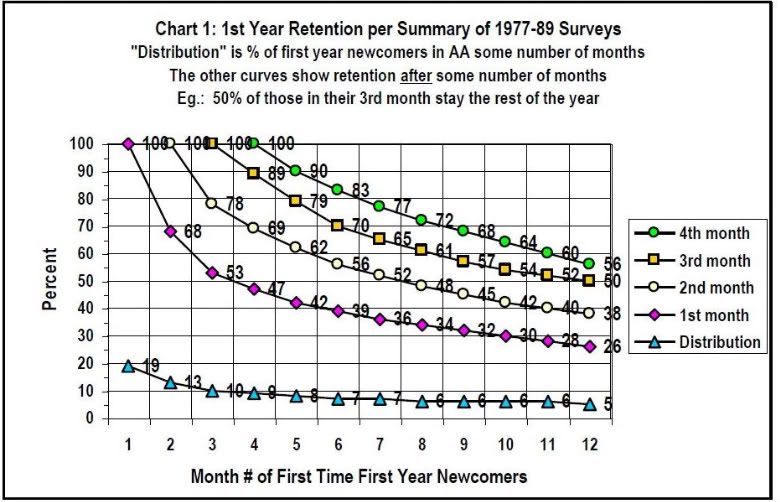
AA is definitely NOT the "feel good peer-driven support group" that everyone touts. It is completely unregulated, and 95% of the people that walk in the door leave...how many of them die? How many recover on their own (like I have now)? How many continue to drink and become burdens on them selves and society (for years...like I did)?
Would you get on an airplane that had only a 5% chance of safely getting you where you wanted to go?
Until you directly answer the question, from all angles: "Does AA do more harm than good?"....then it is a CRIME AGAINST HUMANITY to recommend it or coerce anyone to attend. It is a very pervasive and dangerous cult, so much so that M.D.'s and PhD's recommend it in the absence of ANY valid scientific research showing that it does more good than harm. They should really have their licenses revoked."
Here's one that comes from fundamental A.A.ers vs. the antiA.A.er world pretty much;"People like you and me really are a pain in the rear ends because we possess the holy grail of sobriety...
Yes. The idea that someone might quit drinking and maintain sobriety without AA really seems to frost them--which is why they try to dismiss us by saying that (a) we were never real alcoholics, or (b) we aren't really sober, we are dry drunks."
Well... are you a real alcoholic or not? Some really are not. They are just hard drinkers who cannot moderate, so they stop... if they want to. Alkies don't corner the market on wanting to get drunk. But alkies cannot stay stopped on choice... by definition. And, are you really sober and want to be? Well great. Keep up the good work... or the good... not work. Later, we're gonna get a look at the "lesser of two evils" concept.Now... here is a heavy post that sort of rings true for me... except that he bashes repeating the steps which I do! But he's still pro A.A. in a sense. Interesting post for me;Marcus:"EXIT STRATAGY,
Since I’m here, I’ll take this one on.
(Because most cults, in fact, do not have an exit strategy).
Of the assorted nuts you will encounter in the rooms of AA, you will certainly find the bunch that elude to being in it for life, “I’m in recovery.” “I wish you a slow recovery.”
They work the steps over and over again, they get new sponsors, they beat themselves up…
I personally recoil from these types as if they just farted.
But they’re where they’re at.
We do recover, and just as we diagnose for ourselves (in the beginning) the exact nature of our addiction, we evaluate when it’s time to go. This is something I struggle with as we speak. I say to myself, “Damn, after 15 years, what the hell am I still doing here?”
But like Yoga or Running, AA still feels good to me, so I keep coming. But I share from the heart about having one foot out the door. When I travel, for example, the last place I go is a meeting. But when I’m home, that $1 in the basket is the best show in town.
Am I weak and fragile and unable to live my life without the warm bosom of AA pushing upside me? Will I die without it? No. I just like it, and all it’s given me, and all I may give back as I grow (service).
“My name is M., and I recovered in AA.”
That’s the story I tell. Free of charge.
Tomorrow I may tell a story about leaving for a few years as many of my good friends have, but -- today – I like it."
This it for now. I will hopefully add to this one. I've got to go out into the world for a bit... maybe go to a meeting that I won't get called on."Anybody who has problems with alternative forms of recovery has been indoctrinated. This mentality that AA is the "only way" is scary and cult like. If someone comes up with a way other than AA and it makes money so what? The goal is recovery and it doesnt matter how one gets there. It doesnt matter to me if someone makes a profit off helping someone recover. AA has helped some folks so what? so has joining a church or taking up biking or meditation etc. Why is AA so threatned by alternative forms of recovery? Ill answer that for you. ....Money they would receive. Otherwise why would you give a damn? Its almost always about the money. Sorry, just the cold hard facts of life. M do you really believe nobody at AA is making money? Look at whos involved with recovery and the answers will come to you. See its a lot easier for a counselor to have someone go to AA than really get to the root problems and work on those with the individual. Heres AA's number and let me know how you're doing. That's a lot easier than using your degree and having to work for you money."Wow. I just really... don't know what to say about this. A.A. is doing WHAT with that buck in the basket? Besides buying a few books, some coffee, filters, styrofoam cups, rent in an old church basement, money to send some GSR or delegate to an Area Meeting?It's not that we mind the couselors, therapists, doctors, pychologist, psychiatrists, etc. making few bucks. Some of us are them, bozo. Where these professionals harm the alcoholic is not in their knowledge. It's in their knowledge that's just not true for the alcoholic. What is a counselor, anyway? A guy who gets a plaque that says, "You are sane and everybody else is not.A lady went to a psychiatrist for 5 years and said, "Give it to me straight, doc. I need to know, what's wrong with me?" He said, "You're nuts, you're crazy, you're insane." She said, "I think I want a second opinion." So he stepped back and said, "And you're ugly too."A.A. didn't start 74 years ago as just one of many things to try on the alcoholic. It came about because nothing else was working on the alcoholic. It exists today for the same Goddamned reason. A.A. works for drunks period. If they don't want to do A.A. and you think you have an alternative, go for it. You can have the cannots and the will-nots. But I think you're gonna find some cannots that are misrepresented... IMO.
I hear this often; "they relapsed because they quit going to meetings". Ya OK! So I guess you could say he didn't win the wrestling championships because he quit going to practice, she didn't graduate because she stopped going to school ect. AA's love to share deep insight into the obvious. Fact is people who KEEP going to meetings also relapse. Alcoholics drink because they are alcoholics......simple. There is no reason, thats why it is what it is --a phenomenon. Maybe A REAL ALCHOLIC is in the beginning stages of relapse the momment he stops drinking. The only requirement for membership is a desire to stop drinking. I have stopped drinking for two years now. Do I still qualify? Now I have a desire to not start drinking. I really love sobriety today.
I don't buy that "meeting makers make it" crap either. If somebody drinks they were either not doing steps or didn't want this deal because they thought they had power over booze.
Going to A.A. is no gaurantee of doing steps.
I see many loose meetings in my hometown. There are a couple... maybe a few now... of meetings that actually do steps. I found them. So can anybody else. It's my responsibility to find these good meetings and get in. I've found in A.A. that people pretty much get what they want. Relief is a biggie for some. Some are lonely. Some should really do steps and get spiritually cleaned out, but they resist having their belief systems challenged. Some might not even be real alkies but were hustled in. Yeah, that's right. Hustled in. Why? IDK. Some people were just not "sponsored" properly and have not learned to talk about how they drank booze and surely have not learned to take the time to let the new person talk about how they drank.
This identification is the crux of the whole problem. If that's not there, it's no wonder why some just don't get it. Going to meetings and hiding behind your sponsor ain't gonna cut it come Drink Day.
"Aaa yes. Skin in the game.
On Wall Street, people go to jail for that.
What the heck does that mean? I get the impression that Marcus is trying to show that criticism of AA has financial roots. This is a red herring.
Back to whether AA is a cult. Yes, it is. Not the worst by far, but a cult (lite) nevertheless. Why do people stay with it? Well in my experience these are the main reasons:
- It provides an ersatz social group. Not a bad thing in the beginning, but after a decade or so it usually means that someone has not integrated socially with the outside world.
- A chance to gain self-esteem. This is accomplished via years of sobriety. We all know this. Guru status by the numbers.
- A chance to be heard. A captive audience exists in the halls. We get to air our problems, philosophy, and neurosis for all to hear. We just love those grunts and nods of agreement, don't we?
- A chance to have power. Take the cotton out of your ears and put in your mouth, ya pigeon!
- A chance to be predatory. Midtown, Midtown, Midtown.
- A chance to drink coffee at night. Caffeine's not a drug, is it? How about nicotine?
- A chance to escape the family. My G*d, woman, read that chapter to wives again!"
Well this antiAAer has a few gripes. Don't know if it's the hottest and most compelling bashing I've ever seen. Some of it is perhaps true.
But... if Orange is a scud missile, this stuff is... like a wet cat fart.
"My previous post regarding fear induction in AA has been mischaracterized. My point was not that it is good to become addicted to Oxycontin, or that people don't relapse after years of abstinence (although it is important to note the risk of relapse after five years of continuous abstinence is quite low).
My point was that the writer of that AA grapevine forum post I quoted was setting forth a common AA theme: the notion that to leave the group--no matter how long one has been abstinent--is to invite calamity. This an example of the sort of fear induction that goes on in AA. Since fear induction is often used to keep people from leaving cults, this is an example of an aspect of AA which leads me to believe that AA is a cult."
by Cl****
So... are you saying that I can quit A.A. after 6 or 10 years? Wow. That's nice to know. But what about the freedom I get from maintaining a discipline of spiritual fitness... and here's another spiritual concept your Therapist won't talk too much about, the virtue of helping another new person... aka... it's better to give than receive.
I'm sorry A.A. bashers. A.A. really isn't a jail sentence that we want to soon be done with. It's a way of life for us... with no locks on the doors. Really.
Hi
You most not forget than even it AA is not a cult, at best it is a horrific organization, full of never corrected ideas and prejudices from long ago.
AB
Didn't like the book much, huh? I see many others that love it. I think it's sufficient in and of itself. Written 70 years ago? So what. the mid to late 30s were a hotbed for a bunch of spiritual writings.
Dr. D's Note: My professional opinion is that the question of whether AA is a cult or not is not going to be decided here. Neither side would accept a verdict they didn't like. Meaning - the issue is so polarized that resolution through conventional means seems impossible.
See... this doc saw the antiAAers start to get totally bitch-slapped by the proAAers and here's an example of a little conversation they had in that blog... pretty funny stuff too;
um, what ? - T. - Nov 3rd 2009
Mike : "How are you qualified to "blast" anyone? What are your credentials in terms of psychology, theology, general medicine?"
T:
This is coming from a guy who just blasted people in AA for 'drinking coffee at night'.
Why don't you give us your credentials first. You seem to have alot to say about the way AA is run.
List your credendials to comment on AA in terms of psychology, theology and general medicine.
Go ahead, we're listening.
"What standards do you use for credibility? Common sense, gut feeling, mores and customs, personal tastes? Are you trained to spot credibility?"
In the case of sponsors giving medical advice, it's official AA literature in the form of the pamphlet I linked to.
Also the 12 traditions and general wisdom passed down via sharing. I already went over all this Mike.
Stop complaining for a minute and Pay attention, will you.
"Why not just get yourself a pair of tights and a Batmobile and start helping out the cops in your spare time? I'm sure they would appreciate it - NOT."
I am helping the cops in my spare time. I'm helping drunks (who cops deal with) get sober, stay sober and live a better life.
I'll leave the tights and cape for the anti-AA's. They're busy saving the world from AA while AA is busy saving drunks.
"I'll leave the tights and cape for the anti-AA's. They're busy saving the world from A.A. while A.A. is busy saving drunks."
Ooooh! Flying Bitch-Slap! When an ordinary Bitch-Slap just won't do! Nice Job T and M! Would like to see both yous over on my other "Recovery" site. Thanks for wasting all that time on all those numbskull anti-AAers and the "Doctor".
Here's some more beauties from T and M... hoping they don't mind me indulging here; What’s this? I’m not the only real recovered alcoholic besides Danny Boy and a few over at SR that are defending A.A. from those A.A. bashers?
T:
Cl****, you are certainly not very rational for a person who claims to be interested in 'science based' recovery.
Do you really think that people don't go out on pain meds after having years and even decades of sobriety ?
I hate to break the sad news to you, but it happens all the time. You won't hear about it on your online pretend meetings because no one there needs to be honest. They don't even know each other except for the computer screen.
But since you are so interested in cults. I've taken a look at the SMART recovery website and it's obvious that they are a cult.
Look : "The ultimate organizational authority in SMART Recovery® is the Board of Directors. The ultimate program authority is scientific knowledge and rational thought, as interpreted by the Program Committee and Board of Directors. "
The members have no say in interpreting the program. The gurus on the 'board' make all their decisions for them. Tsk, Tsk. Very dangerous.
And look at these 'thought stopping clichés' they use :
USA = Unconditional Self Acceptance
UOA = Unconditional Other Acceptance
According to the cult leaders on the SMART board of directors you 'must' accept yourself and others unconditionally. That's a standard cult ploy. When the board comes to use you for sex and money, you will have to accept them. Terrible.
You should be ashamed of yourself Cl****.....oh that's right, you aren't allowed to be. LOL !!!
Posted by T
M:
Since this board reeks heavily of corporate-opportunism (alternatives to AA), I’d like to put something out there.
The only way I discovered AA was when I was about to take my last breath. That is, because I couldn’t see a way out of the addiction-trap, I considered jumping in front of the A train at 14th Street & 8th Ave. Instead, I called a relative and spent the next 5 days in detox, then the next 28 days in a rehab (based on AA); then to a sober house (also based on AA) -- then to AA on my own. Lucky me. I lived.
My point is: I was as drowning as the drowning can be; driven to AA because my life depended on it. And that’s the only way I found it.
For pedestrians, it is completely off the radar.
Except for!!!!
People who have an interest in debunking AA because they have alternative goods and services for sale; A.K.A. therapists, councilors, doctors, lobbyists, self-help authors, disgruntled students, researchers (lobbyists) …
Bulls-eye.
Why else would you give a hoot? Moreover, how on earth did you find us if you’re not in the biz? Don’t you have some papers to scuffle?
Not withstanding the article that appears above, because it makes a good-clean point regarding AA & cultism from a good clean-doctor who really doesn’t take a hard line either way. He’s a seek looking for answers. Fair.
And not withstanding people who are in the ditch (newcomers) who tried AA, weren’t ready to quit, and came here to tell you why it doesn’t work. We can spot those a mile away. (If the train doesn’t take you out, keep coming back. We’re here for you). (Keep talking about it).
I’m talking about the jackasses that come here to suggest some alternatives to what’s on the menu. Like, “You tried the moo sho beef but how about the egg foo young? And didn’t you hear, moo sho beef gives you cancer.”
It’s a nice strategy. But it ain’t gonna work.
I went to a therapist once to get my drivers license back. It was a funny experience. I told her I had been sober for 7 years in AA (truth), and wasn’t looking for therapy, but I need a “professional” signature to get a DWI scrubbed from my record (also the truth). She looked at me as if I had just taking a hit of crack.
She would ask an honest question like, “So, how was your childhood? And I would say something like “it sucked.” And there would be a long pause after every follow-up question as if everything I was saying was a complete lie. Because I knew she believed that AA didn’t work. And she knew I discovered her position from the get-go.
She stuck to her guns and I walked out.
Just like the silly rabbits on this board that stick to their anti-AA propaganda.
C’ya.
Posted by M
As far as SMART recovery being a cult. I was honestly surprised at the similarities between SMART and AA. Obviously if one is a cult, the other must also be.
And quite frankly, those slogans scare me a lot more than any AA slogan ever did. AA slogans tend to be folk wisdom. "If you don't pick up the first drink, you can't get drunk", "Keep it simple stupid", "Easy does it" etc...
It's hard to argue with that kind of stuff.
But "Unconditional Self Acceptance" is not only scary, it's illogical.
If I am an alcoholic (I am) and I accept myself unconditionally (I never would) then I will die an alcoholic death.
It's very dangerous to accept yourself unconditionally.
I think it's dangerous to do anything unconditionally.
That word 'unconditional' shuts off thought in a way no AA slogan ever has.
“…came to see it [AA] more and more as a dangerous…organization that enables sociopaths and neurotics of all stripes to ply their trade.” --mike
M:
When I first came to AA I was one of them, sociopath and neurotic. And now I’m neither; but I’m surrounded by newcomers who are both – and then some.
Reflection,
One of the reasons I’m on the fence about stepping away from AA for a while is this very point. I got well, and my taste for people changed to being comfortable around wellness -- rather than being comfortable around dereliction. Hence, personal growth.
But for the newcomer – not so. The new-be benefits from the “street” feel of AA. It’s not to far from where they fell – which is the essence of identification. And it is the essence of how AA works.
But I don’t agree AA is dangerous. It’s as it should be, “gritty.”
I’m 90% sure, too, that it ain’t a cult either. But I’ll meditate on it.
Someone who was working the city streets to buy drugs, and such, has no problem at all dealing with a group where people use to do those things – and now they don’t. They are safer with us that without us.
There are seeks [homeless] in the Manhattan rooms who only come for the cookies, coffee, to use the bathroom, and/or to panhandle for a few bucks (annoying). And there are “old-timers” who stay to meet the perfect girlfriend or boyfriend, or to have a fling (more annoying). As far as AA “enabling” the madness. No. AA tolerates it because, as a group it realizes the rooms can absorb it. And that everyone, no matter how insane, has a chance to get well.
That’s why I stay. To be a power of example. Service.
“M. do you really believe nobody at AA is making money?”
Like I said, it’s irrelevant. If someone attends a meeting, and has a dollar to put in the basket, great. If not – no problem. At the group level, that money pays for the group to keep the lights on. After all group expenses are paid, the rest – a small piece -- gets pasted up to Intergroup. Most groups don’t pass up anything.
If your question is, are people stealing money? The answer is mixed. I was involved with a group who I knew full well the treasurer was skimming from the kitty. I knew it because I was the treasurer before her, and I knew the numbers regarding the group – and hers didn’t add up. But I still put a dollar in the basket (service).
If your question is, is AA making truckloads of cash? Let me put it to you this way: in this last financial mess, Goldman Saks, with the assistance of Henry Paulson (treasury secretary) and George Bush almost single handedly bankrupted a nation. Things like Paulson being on the phone with Lloyd Blankfein (current Goldman Saks CEO) the morning TARP was about to be announced, bans on short selling Goldman’s stock, and other stuff. What these folks did was criminal. You or I would be in jail for it. And JP Morgan Chase went along for the ride. So did Wells Fargo and a few other banks. They (Paulson, Bush, Goldman) redirected trillions of tax dollars to save their own assess; letting a slew of competitors rot (Lehman bros, bear Stearns, others).
They all made truckloads of money.
I still have a Chase bank account. I’m still and American.
And if we look at the $2.7 trillion spent on healthcare in this nation, I’d conclude that if the higher up’s at AA make a few dollars selling books – good for them. It’s trivial. In fact, even it AA world services fell off the face of the earth, AA, at the group level, would continue unaffected.
It’s pointless to argue that AA is a fat cat (except if you are a competitor).
Cl****, you say "it is important to note the risk of relapse after five years of continuous abstinence is quite low".
We need a citation for that. The numbers regarding recovery are not very well known and you have given us bad information in the past. (the 5% triennial survey myth)
Also, your point was not mischaracterized.
You stated that:
a. cults use fear induction techniques to retain members.
b. AA uses fear induction techniques to retain members
C. therefore AA is a cult.
The obvious flaw in your logic is that the scenario you offered as a 'fear induction technique' was merely a statement of fact conveyed in the folksy style that is common in AA. (Point b is wrong therefore your conclusion is wrong)
Since:
a. alcoholics ARE susceptible to relapse on pain medication.
b. AA's primary purpose is to 'stay sober and help other alcoholics to achieve sobriety'.
c. Therefore talk of the dangers of pain medications is prudent (ie not fear inducing for the purpose of retaining members) .
The message that alcoholics are better off attending meetings on a regular basis is also, not a cult feature but a mere fact.
It's common for people to loose weight by joining weight watchers and sticking with the program. It is almost just as common for people to put the weight back on when they stop attending weight watchers meetings.
Behavior modification is often a life long process.
Newcomers are told to make as many meetings as possible because that will increase their chances for success. Most old timers don't go to meetings every day. Remember that when AA's speak they aren't talking in terms of 'doctrine', they are talking in an indirect way that is intended to pass on a certain wisdom and not absolutes and cold hard facts. (i.e. folksy)
You are arguing that because AA recognizes certain objective facts that it is a cult. This implies that you don't like certain truths and are resisting them. It does not reflect on AA at all.
15 reasons why AA is NOT a cult – but the medical profession [MP] is:
Here is a list, 1-15, of characteristics typical within a CULT:
1. The group displays excessively zealous and unquestioning commitment to its leader and (whether he is alive or dead) regards his belief system, ideology, and practices as the Truth, as law.
AA: Most participants poke fun at Bill & Bob (founding fathers). AA’s belief system is based on suggestions, not law. Leaders are but trusted servants.
MP: If you question the authority of your superiors in a hospital you’re fired. If you repudiate DSM protocol, and such, you get sued, blacklisted, lose your license, and/or get thrown in jail.
2. Questioning, doubt, and dissent are discouraged or even punished.
AA: rather than discouraged, questioning and doubting AA is encouraged. Speak your mind.
MP: The idea of the medical profession still practicing a form of art (medical arts) is long gone. Follow protocol or you’re out of here. Don’t ask questions – just do your job.
3. Mind-altering practices (such as meditation, chanting, speaking in tongues, denunciation sessions, and debilitating work routines) are used in excess and serve to suppress doubts about the group and its leader(s).
AA: leaders are but trusted servants. They do NOT govern. Most business meeting are a 15 minute joke. You can say whatever you want in AA and/or about AA and nobody cares. Take what need and leave the rest. Come once per year or 4 times per day. Up to you.
MP: billions of industry dollars are spent to promote the cause. Misleading drug campaigns run round the clock on radio, TV, and the Internet. As an employee of the industry you are schooled, then paid well to keep your mouth shut.
4. The leadership dictates, sometimes in great detail, how members should think, act, and feel (for example, members must get permission to date, change jobs, marry—or leaders prescribe what types of clothes to wear, where to live, whether or not to have children, how to discipline children, and so forth).
AA: has no opinion on outside issues, “don’t drink, go to meetings, and the rest will take care of itself.”
MP: You wear a uniform. You train in great detail, some times as much as 12 years in college, on how to think, act, and feel in every aspect of your life; your mind, body and soul are controlled by lobbyists. Your opinion is their opinion. Freethinking is thrown to the wind. All your time is devoted to the group.
5. The group is elitist, claiming a special, exalted status for itself, its leader(s) and members (for example, the leader is considered the Messiah, a special being, an avatar—or the group and/or the leader is on a special mission to save humanity).
AA: leaders are but trusted servants. An AA meeting is nothing more than a collection of testimonials for whom the program has worked.
MP: The medical profession -- and the hospital you work at -- claim all of the above for itself. They are the ultimate authority on all things “health.” Everyone else is thrown in jail for practicing “medicine” without a license.
6. The group has a polarized us-versus-them mentality, which may cause conflict with the wider society.
AA: is the wider society. There is no conflict. Anyone can be member.
MP: the US medical industry claims ultimate authority and righteousness on all things regarding personal health. To the MP, “if an alternative view doesn’t agree with our logic, then they are preaching lies and/or dangerous philosophy,” and it is all punishable by law.
7. The leader is not accountable to any authorities (unlike, for example, teachers, military commanders or ministers, priests, monks, and rabbis of mainstream religious denominations).
AA: all “leaders” are trusted servants elected by, of, and for the people via democratic process (with term limits).
MP: The medical profession is not only not accountable to any authorities – they positioned themselves to be the only legitimate authority on your health.
8. The group teaches or implies that its supposedly exalted ends justify whatever means it deems necessary. This may result in members’ participating in behaviors or activities they would have considered reprehensible or unethical before joining the group (for example, lying to family or friends, or collecting money for bogus charities).
AA: has no opinion on outside issues. Members, led by other members, participate in a simple program of recovery that has proven itself to work for more than 70 years.
MP: promoting hard-on pills (viagra), and such, on primetime TV -- when kids are watching -- is reprehensible and unethical. A pill for everything. But you have to keep that money machine rolling!
9. The leadership induces feelings of shame and/or guilt in order to influence and/or control members. Often, this is done through peer pressure and subtle forms of persuasion.
AA: has a very loss leadership of trusted servants. All decisions evolve via group conscience.
MP: claims ultimate authority on all things regarding a persons health; to it’s members it says, “if you DO NOT prescribe this pill, or push a seek towards that specialist, YOU ARE FIRED.” Everything is protocol. Thinking ‘outside the box’ is illegal.
10. Subservience to the leader or group requires members to cut ties with family and friends, and radically alter the personal goals and activities they had before joining the group.
AA: suggests that you “stick with the winners.” The only goal is to help a member stay away from the first drink/drug.
MP: 12-hour workdays, holidays, weekends. On your time off, “advance training” to get more “degrees.” Work-a-holism. Total submersion.
11. The group is preoccupied with bringing in new members.
AA: does NOT recruit. Operates on a policy of attraction rather than promotion. One alcoholic / addict helping another.
MP: Spends billions recruiting employees on college campuses. Spends even more billions to educate it’s members regarding it’s long list of products aimed at a vulnerable the public.
12. The group is preoccupied with making money.
AA: is self supporting through its own contributions declining outside contributions.
MP: the US healthcare lobby is concerned exclusively with making money. “Health” is not even a close second. Most MP companies are publicly traded, their leadership is composed of some of the highest paid individuals in America, drug companies make more money in one day than AA has generated in it’s entire 70 year history.
13. Members are expected to devote inordinate amounts of time to the group and group-related activities.
AA: has no rules regarding time whatsoever. It has mere suggestions such as, “a meeting a day for 90 days,” and such.
MP: When you join the medical profession, you are expected to devote your entire life to your “career” (making money).
14. Members are encouraged or required to live and/or socialize only with other group members.
AA: members live wherever the hell they please. Some are even bartenders.
MP: members are indoctrinate via extensive internships, degrees, and live-in residencies. Members devote their entire lives to becoming and maintaining their membership.
15. The most loyal members (the “true believers”) feel there can be no life outside the context of the group. They believe there is no other way to be, and often fear reprisals to themselves or others if they leave (or even consider leaving) the group.
AA: nearly all AA members recover (graduate) after a certain period of time. Many stay to show the newcomer that it works.
MP: after sending your entire life in school, in a hospital wearing a funny white uniform, in a “research” laboratory, pushing your finger up people’s anuses (literally), making truckloads of cash and thinking you have all the answers to the worlds health problems, where else are you gonna fit in? You’re in it for life. Who else is going to put up with your crazy self?
Conclusion,
AA is not a cult – but the medical profession certainly is.
--M.
Mike : "I think you and T are doing more to advance the AA/cult link than I or others on this forum are capable of. "
This is a classic ad hominem argument.
Your premise is that M. and I exhibit 'cult like behavior' and we are members of AA, therefore AA must be a cult.
Even were your premise correct (you can ask Dr D for his professional opinion if you like), it does nothing to prove your claim that AA is a cult.
All fluff, no fact. Typical anti-AA argument.
I made my first meeting almost 28 years ago, took my last drink over 19 years ago. Cult? Nah. Don't know what these guys got against an organization that does so much for so many. Do all Methodists live wonderful lives? How about the Catholics? Probably not. Neither do we.
BUT...my life is so much better now than it was before I learned what my problems truly were. Plugging the jug was merely the first step in this journey. The ONLY problem I can see with AA is that it only works for those who want this way of life, not for all who need it. It is all about free will. Cult? Nah. A way of life I wouldn't trade for anything.
AA position on medicine – T. - Nov 2nd 2009
Dr D, here is a pamphlet published in 1984. It is 'official' AA literature.
I think it deals with the problem in a very honest and straightforward manner.
http://www.aa.org/pdf/products/p-11_aamembersMedDrug.pdf
The message I've always heard is that you can take any medication as prescribed by a doctor and not 'relapse'.
Once you stop following the doctor's instructions you are abusing the drug.
While I've heard of people advising sponsees to stop taking medication I've also heard old timers rail against that sort of thing at meetings.
While it is a favorite topic of the anti-AA it isn't the norm and AA's themselves are aware of the problem and attempt to address it.
(Trust me, if the anti-AA's can figure something out, it's got to be right in front of everyone's nose. They aren't 'deep thinkers')
Medications and AA - D. - Nov 2nd 2009
I've been to a lot of meetings in a lot of places over the last 28 years. What we in AA do is pass on what we have experienced, what our strengths are, and what our hopes are. We relate in general ways what our lives used to be like, what happened, and what we are like now. I have had surgery twice and have been prescribed pain meds. I use them only as long as I have pain. I would not tell a sponsee to avoid prescribed pain meds. I take a prescription anti-depressant every night at bedtime.
I was ten years sober before I learned my emotional roller coaster rides were abnormal. It was a fellow AA that suggested I see a doctor when my depression was sever enough I stopped sleeping.
There's a lot of AA bashing on the internet. I don't understand it. During the seven and a half years between my first meeting and my last drink I never once questioned AA's path to recovery. I merely thought my case was different. Once I came to believe I was LIKE those folks in the meetings instead of DIFFERENT from them I haven't had to use drugs or alcohol since.
If some genius in medical research came up with a pill today that when used daily would allow me to drink a beer or two after work without the awful results I have experienced in the past I would not use it. My disease still IS even though I have not used for nearly 20 years. It is in the way I think and AA helps me with that. The people in AA gently demonstrated to me through their actions that God, however I might choose to understand God, not only could help me with life's problems but would. I didn't even have to believe in this GOD...only believe that my way didn't work...and pray...even if I didn't believe in prayer. So I prayed...the faith came later.
I had had faith in many other things that had let me down. God and AA have never failed me. All I had to do was ask.
On doctors and drugs… - M. - Nov 2nd 2009
As a former med-professional and recovered member of AA, I’ll conclude, “a drug, is a drug, is a drug.”
Opinion,
Alcoholism and drug addiction are one in the same: probably organic in nature. Meaning, at the cellular level, an addicted person alters his/her neurotransmitters to the point of no return (lock & key theory). Afterwards, unless a psychic change occurs (Carl Jung, Buddha), former pleasure centers in the brain are no longer stimulated naturally, but only via a drug of choice, a close second (prescription med), or a combination of the two.
My eyewitness experience,
If a seek lands in AA on psychotropic meds, or picks them up after starting the program, until they let go of them absolutely, recovery is static. The seek looks to the drug as a crutch rather than letting the process of reprogram the mind, body, and spirit via AA occur (psychic change).
The collective conscience of AA suggesting any drug will keep a seek in the pit of addiction is NOT practicing medicine without a license. Only a doctor “prescribes” – the rest is freewill via suggestions/experiences on the part of individuals who have solved the drink/drug problem where doctors (pushers) have not solved any such problem.
AA is based on the notion that the body is a temple for the spirit. A healthy body yields a healthy spirit. So is yoga, religion, voodoo, marathon running, and the rest.
Prolonging the agony,
If an AA seek is still smoking, eating junk food, not sleeping, not exercising, not meditating, not listening to the voice of reason (AA), recovery is also static. Piling pharmaceuticals on top of the already insurmountable physical hurdles a seek must jump is exactly that – piling on.
The people who truly recover from addiction are the ones that let go of an old way of life – and accept a new one as the only way out of the suffering. They are the winners.
The seek who gets “stuck” in AA (or in an insane asylum); who hasn’t made the connection between their physiology and their addiction; they smoke, eat crap, don’t exercise, visit doctors for goodies; they are the losers.
In death do we part? (not),
Only in the case where an individual will probably kill themselves before a psychic change can occur is a drug acceptable. Methadone, for example. Keep the seek alive – point them at AA. Then there is hope.
Where is this exactly ? – T. - Nov 2nd 2009
Cl**** : "Over my nine years of AA membership, I witnessed many instances of individuals being advised or ordered not to take medication.
With respect to addictive medications, such as pain killers (OxyContin, Percocet, etc.) and tranquilizers (Valium, Ativan) the advice was typically never to take these medications at all, under any circumstances, because the risk of relapse was too high. "
Where was this ? What state and what home groups ?
I got sober in NJ and that is not normal at all around here. The normal advice about pain medication is to 'take as prescribed'.
And just as important, what did you do about the situation? As a member with 9 years in the program why didn't you understand the correct position a sponsor should have on prescription medication use and make the group aware, or if you did why did they not listen to you ?
I can tell you, I would pull individuals aside and protect them from bad sponsors (have done it a few times) and I would blast a sponsor like that from the floor every time he opened his mouth or I got wind of him doing something like that.
I would, in short, do my best to ruin his credibility. If the transgression was on a group level I would do the same thing to that group. I've seen groups and whole clubs fold because they lost credibility and the 'old timers' wouldn't participate in meetings.
On sponsorship… - M. - Nov 3rd 2009
There is a lot of talk on this board, and in the rooms of modern-day AA about sponsorship, but, for the record, the big book actually talks very little about it. Why today’s AA has gone from zero to 60 on sponsorship, and it’s importance, is a mystery to me. I personally view it as my least favorite tool. In 15 years, I have never had a sponsor nor ever sponsored anyone. Because I think it’s stupid. I don’t abide to any one piece of advice – why would I listen to a single drunk?
The true power of AA for me has always been service, home group and the group-collective (shares from the floor).
So for those, here, who profess very little about AA with their shallow views (you know who you are), and yet still hate on sponsorship, I say, we may have finally found something in which we agree.